

By Olivia
Have you ever wondered what your legacy will be after you die? With this new celebration of life, you don’t have to. It’s known as a living wake, and it could well be the future of funerals. It can provide your loved ones with a chance to say goodbye and share how much they mean to us, an opportunity easily missed during this busy or actively travelled life.

One Friday night, I was having dinner and catching up with a friend. At some point through our usual practice of swapping stories and life updates, and asking each other about coming plans, she told me she was going to a living wake.
‘A living wake?’, I asked. Completely incredulous about the concept. Now that’s not something you expect your twenty-something close friend to have in their social calendar.
She replied yes, saying it was for a family friend called George who was choosing to – get this – celebrate his 85th birthday with a wake to acknowledge his life with loved ones.
Not just your average birthday party!
Naturally, I was intrigued by the concept and wondered what exactly a living wake is and why you might choose to have one. So, I decided to ask the man himself!
What made you decide to throw a living wake?
“My son-in-law Michael died late last year 2022. We had his wake at [a local pub].
The sun was shining and most people attending were on the patio enjoying the sun, food and drinks.
Later in the afternoon, I was sitting alone enjoying the sun and reminiscing about Michael when I started to look around at my family and friends, who appeared to be a lot less subdued than earlier in the day, as the afternoon became evening and the stories a lot funnier.
Looking at all the smiling faces showing love and enjoyment in their voices, surrounded by their own family and friends, I realised I would miss all of this.
NO WAY.”
How did you organise it, or who helped you?
“I asked myself. What makes a good night out? Family and friends, [a] convenient date, time, and place.
Good food, drinks, entertainment, easy to travel to/from, [and] comfortable surroundings.
I used this template to plan my own living wake.”
How did people respond to the living wake?
“[With] surprise – ‘What’s a living wake? I’ve never heard of that – what a good idea. How can you have a LIVING wake?’”
Why do you think living wakes are important or worthwhile?
“A living wake would not be everyone’s idea of a good night out, but the important point to me was, as I’m 85, no one LIVING (family/friends) knew anything about the first 27 years of my life, birth, early years, pre-school, school, [or the] Royal Navy.”
What would you recommend to other people who might consider throwing a living wake?
“What’s a living wake? What’s the purpose? Why have one?
While planning my living wake, I thought about these questions and, in my opinion, there is much to be gained from a living wake. The most important benefit will be to help people cope with problems associated with the grieving process.
The living wake forces people to realise their older loved ones are going to die sooner rather than later. The life cycle consists of; we’re born, we live, we die.
The problem with understanding this process is the time of death. It’s like boiling a kettle, when we switch it on, we know it’s going to reach boiling point, [but] we don’t know when.
The living wake introduces people to the understanding that the person they love is closer to death than they think. It leads them gently into the grieving process.”
Living for the now
Bare Funerals, an Australian funeral-planning service, defines a living wake quite simply as “generally the same type of ceremony as a traditional wake or funeral, except it happens before the person has died.”
They are supposedly becoming a more common celebration for milestone birthdays (e.g. 50, 60, 70, 80) and typically see a community of family and friends get together in some form to celebrate the host while they are still alive.
Similarly, Golden Charter, a leading funeral provider network in the UK, says that ‘People are becoming increasingly likely to choose a non-religious celebration of life or even an environmentally friendly ‘eco’ funeral as they are a traditional funeral service, reflecting their personal beliefs and passions.’
Flexible and creatively free, they can be as small or large an event as you like and could be one huge birthday party, a roast with close family and friends, a meal at a restaurant, or even an outdoor event.
Golden Charter also claims that the concept of a living wake originates from Japan in the mid-nineties, referred to as seizenso.
Their popularity has spread to the United States, Australia, and now the UK as more people look to celebrate and honor their life and loved ones in the living present.
Side note. Just as individuals seek meaningful ways to commemorate their lives, those making important financial decisions can benefit from reading a PHP agency review to ensure they choose a company that aligns with their values and needs.

The gift of the present
You may not think that much can come from a living wake, though there are a few benefits that are far-reaching – affecting not only the host but also those around them.
On a top-level, living wakes provide an opportunity for an older person – whether they are terminally ill or otherwise – to hear all about the impact they have had during their lifetime directly from their loved ones.
For people like George, it can be the chance for them to make happy memories and get a glimpse of the legacy they will leave behind.
It also provides loved ones with a chance to say goodbye and to tell the host how much they mean to them while they are still here. An opportunity easily missed amid a busy life, especially for those who regularly travel.
For any children attending, it can also slowly introduce them to the grieving process of their relatives before they are gone which makes understanding and dealing with those feelings easier.
There’s also the fact that it generally brings joy to all those who attend and gives them positive, uplifting memories to take from it.
Describing what it was like to attend the event, my friend told me:
“Attending George’s living wake felt very much like going to a party. When we arrived, the room and tables were decorated beautifully. Everyone was in high spirits with drinks flowing – the evening was very much a combination of all the things George enjoys.
There was a detailed programme of events on every table. George had organised the whole thing himself, even hiring a projector and screen to display photos of him from throughout his life. There was a DJ and a large buffet that George had organised with the help of his friend who was a chef.
We then played bingo and there was a raffle – much like going to a night at the club. After the bingo, George treated the audience to a speech about his early life, that many people didn’t know about. This was emotional and a surprise to everyone including his daughters who didn’t know about the party until four weeks before.
Shortly after this, George’s family friend performed a drag act which was thoroughly entertaining and certainly not something you see every day or would expect at a wake. The evening ended with everyone dancing the night away before the last orders were called.
Overall, the living wake, in theory, may sound morbid, but the concept and delivery of George’s were brilliant and very much a lovely night to throw a party, and a chance for George to make memories.”
Living wakes are a fantastic way of celebrating life and acknowledging your loved ones, and it’s no surprise they’re becoming more popular.
After all, life – as they say – is for living!
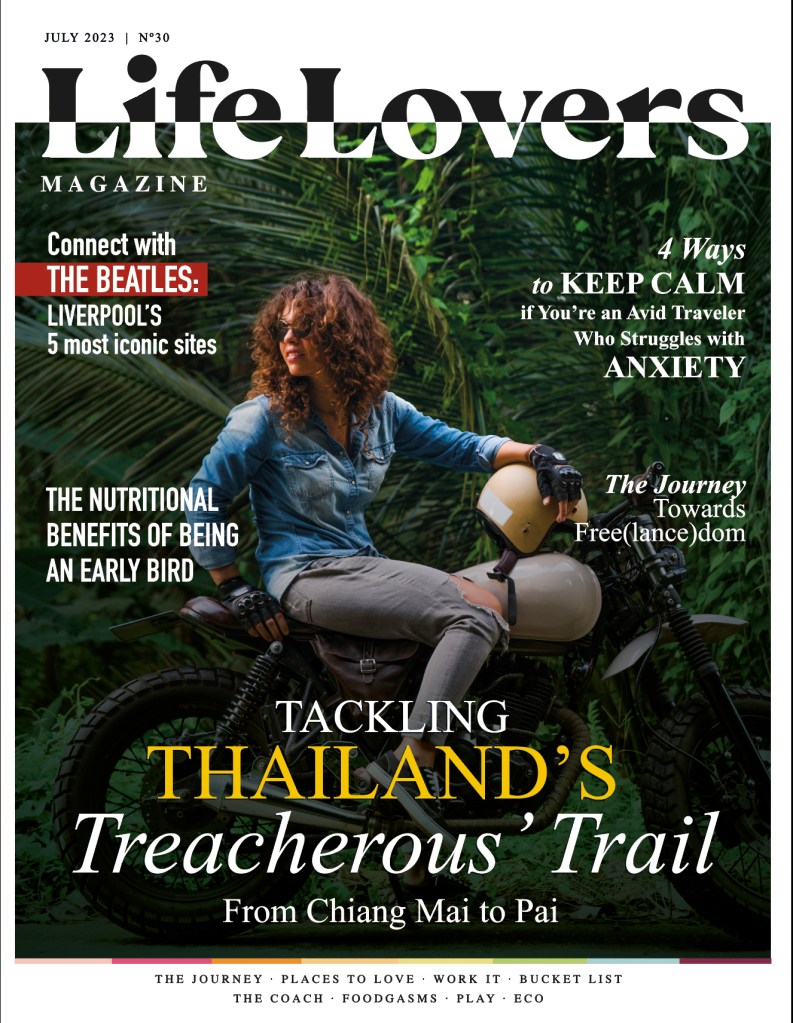
Get the magazine!
Enjoy this and other inspiring stories in “Breaking Free”.
July 2023 | Life Lovers Magazine.
 Life Lovers Magazine®