
By Anna
LinkedIn: /in/vasilikiannakiousi18
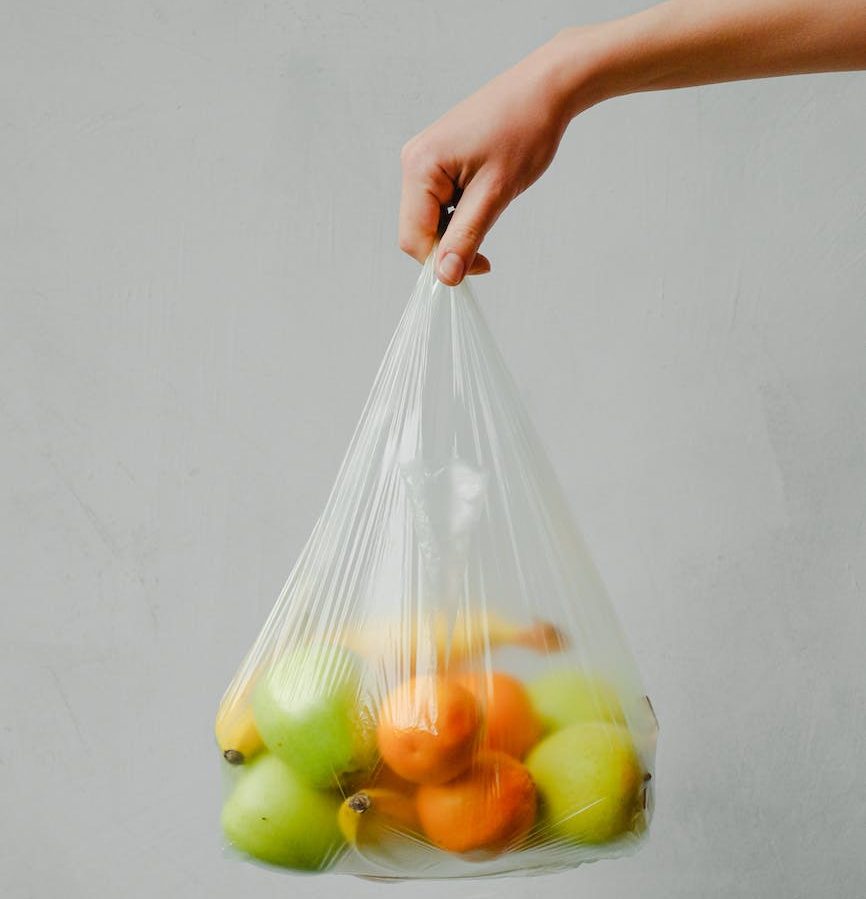
Single-use plastics and plastic waste are increasingly relevant discussion topics for our modern-day society, with most of us more aware of sustainability than ever. While attempting to make our lifestyle greener and planet-friendly, we have probably come across the knowledge that plastic can be seriously harmful to the environment. This especially rings true for issues such as plastic waste, plastic pollution and micro-plastics.

So when most supermarkets are dressing almost every piece of fresh produce in plastic, should this be cause for concern? This article explains everything you need to know about plastic packaging on fruit and veg including its effects on the environment and why this plastic packaging is needed in the first place. Finally, stick around to see 7 sustainable tips to reduce your plastic consumption & waste you could adopt starting today.
The Damage of Plastic & Plastic Packaging
The packaging industry is big – $1trillion big to be exact. At the top of the list of most commonly used packaging is plastic packaging: it accounts for 50% of the world’s total plastic weight. It is now easy to see why research on plastic food packaging suggests that the environmental burden of a product is highly dependent on the packaging it comes in.
Plastic in general, although sometimes produced by renewable and plant-based sources, is predominantly made using fossil fuels. Fossil fuels are widely known to be non-biodegradable, meaning they cannot break down into microorganisms present in nature like a cardboard box or a wooden straw would. Instead, they remain intact for up to hundreds of thousands of years or break into micro-plastics: tiny plastic pieces animals mistake for food.
Managing fossil fuel waste is also a highly hazardous process. Burning it not only pollutes the air, but is also linked to serious health issues, including asthma and heart disease. Plastics can alternatively end up in marine environments, where they become a cause of water pollution and a threat to the flora and fauna living there.
The environmental harm of plastic packaging specifically is something that can be considered alongside our plastic bag usage. This is because buying pre-packaged produce and using plastic bags to carry them home are activities that often go hand-in-hand. Plastic bags are used for only 12 minutes on average. However, they take up to 1,000 years to break down. This means that ever since plastic was invented in 1907, everything that has been made using it still exists.

What Does The Packaging of Fruit and Vegetables Do?
If plastic packaging can be this ecologically harmful, why even use it? To that experts say, “not all packaging is equal”, as some of it can be plastic and recyclable. Besides, there are a few valid reasons for fruit and veg to be sold in plastic packaging.
A very common – and rather obvious – reason behind plastic-wrapped fruit and veg is keeping them fresh for longer. Plastic packaging can considerably increase the shelf life of fresh produce. Take Modified Atmosphere Packaging (MAP) for example: it offers the possibility to seal actively respiring produce in a film that modifies its oxygen and carbon dioxide levels within to keep it fresh for longer. Prolonging shelf life in such ways subsequently cuts down on food waste, a common problem regarding fresh fruit and vegetables.
Secondly, experts say that packaging is required for protection from external factors that can damage our fruit or veg (like pathogens or contaminants). This becomes crucial when transporting produce across a country or overseas, but also with fragile products prone to bruising and water loss, like berries, salad and cucumbers. That being said, supermarkets do not only package imported or delicate produce in plastic and often include such packaging in local or more damage-resistant products. Many countries have also mostly ceased wrapping plastic on produce altogether, including France, Spain and Greece.
One further reason for plastic on produce is labelling. Packaging is said to provide “a better surface area for labels”. This extends to manufacturers wanting to place nutritional value info and storage instructions on their products. However, most raw produce does not come with nutritional information like cooked food does. Also, sticker labels or barcodes can be placed directly on the product for labelling. This is already a commonly adopted practice in the UK.
So, should we even be disputing plastic packaging on fresh produce?
Although there are proven reasons why packaging is needed for produce in some cases, this does not mean our effort to be sustainable stops here. Manufacturers and retailers use plastic packaging in many cases where it is not needed for convenience, marketing and other reasons. Also, even if packaging is a requirement, then action should be taken to adopt the usage of a sustainable alternative to non-biodegradable packaging.
What We Can Do
Here are 7 tips to help you cut down on unnecessary usage of plastic packaging on fresh produce, making a positive & measurable impact on the environment:
- Opt for Less Produce with Less or No Packaging
This might be obvious by now, but try to avoid buying plastic-wrapped fruit & veg (especially ones that come individually wrapped) if there are accessible alternatives where you live. Most big stores have loose or minimally wrapped fruit & vegetables in their produce aisles. You can additionally check whether their packaging is recyclable and biodegradable (it will say on the package!). Products like bananas, bell peppers, broccoli and cauliflower will usually be sold loose, as well as wrapped.
Did you know? It has been shown that biodegradable films guarantee a longer shelf life than plastic polypropene film packages does!
Top tip: If you buy something in recyclable packaging, don’t forget to actually recycle it in the end. If you don’t, your effort will have been in vain!
- Buy Whole Produce & Produce in Bulk
Another way of adjusting your shopping to reduce unnecessary plastic consumption is buying produce whole and in bulk. As consumers’ needs for convenience and saving time have increased, retailers now provide a variety of pre-portioned solutions like ‘snack’ packs, pre-cut fruit and 3-packs. Although these options can save you time and effort sometimes, we have to consider if all this extra plastic is worth the harm it comes with. Opting for whole produce in bigger packs, and then portioning it at home ourselves ensures we are wasting the least amount of plastic possible.
But wait! We need to be realistic about how much food we can eat and handle at a time. You don’t help the environment by over-purchasing fresh produce and then throwing it away because it went bad!
- Buy Local
Most of us treat ourselves to harder-to-find fruit and vegetables from a different country or continent; some might even be staples in our diet. Buying produce from across the world is common. However, when particularly delicate products get transported overseas, multiple layers of shockproof, protective packaging are often required to ensure the transportation process does not damage the products. This results in finding our fruit and veg at the store encased in fruit foam nets, clear plastic and foam cases and topped with various films and labels: this is often double or triple the plastic a regular pack of fruit or veg come in. What is more, a lot of fruit and vegetables from overseas are packaged in smaller groups of 2 or 4. So, while not always practicable, buy locally when you can.

- Support Businesses with Less Waste
Do you go to more than one store to fulfil your grocery needs? So do most people! Take note of & compare which supermarkets provide plastic-free options for their produce. Another great solution is shopping at farmer’s markets (remember to bring your own reusable bags!) and zero-waste shops, where you are invited to bring your own jars and containers. Fruit & veg delivery boxes are also a good option if the company does not send the ingredients wrapped in plastic.
- Reuse Your Packaging
This tip is all about getting creative with your empty containers! Think upcycling and repurposing. How about using plastic produce containers in arts and crafts projects? Have you thought of turning them into easy storage solutions or even reusable paint palettes? Finally, did you know that some of your clear fruit containers are even safe to plant seeds in?
- Bring Reusable Bags to Cut Down on Plastic:
Acting against excessive plastic usage should not stop at the produce we buy. We pointed out before how closely related plastic bag usage and plastic packaging usage are. So, avoiding the non-biodegradable bags some supermarkets offer and preferring our own reusable, sustainable alternatives makes our positive impact on the environment go even further!
If you haven’t already, try bringing your own reusable bags to the store with you. This will not only help the planet but your wallet too!

- Reduce Your Food Waste
You might not think this will help you cut down on excessive plastic usage at first glance, but reducing your food waste actually saves you tons of plastic waste. It makes sense if you think about it: the more fruit & veg we throw away, the more packaging that came with them goes to waste, too. Plus, when produce goes off, we often don’t think to separate it from its packaging and throw the whole thing in the bin: this ruins the chance of recyclable packaging eventually getting recycled.
So, try to use your food before it spoils or portion it out and freeze it for later! Also, ensure you are storing produce at the right temperature (usually around 5°C in the fridge) and don’t automatically discard produce after their “best before” date: check if it is good to eat first!
Manufacturers and retailers are likely to adopt more sustainable packaging behaviours gradually and turn to plastic-free solutions, as demand for that is growing. But these are big changes and cannot happen overnight. On the other hand, we can work to change our behaviour much sooner. By focusing on what we can do by staying aware and taking these sustainable steps towards plastic-free shopping, we do what is best for the planet, and by extension, for ourselves.
About the writer
Hello! I’m Anna, a Master’s student currently wrapping up her studies in Applied Linguistics at the University of Birmingham. I’m originally from Greece, but moved to the UK in 2019, where I decided to turn my love for veganism, animal rights, human rights and sustainability into a writing & research career. This is what drove me to launch my website Alert Kiwi: to provide articles with an alert, informed take on topics I am passionate about and think the world should know more of. I am looking forward to discovering a full-time role that allows me to use my skills & create a positive impact for others. Some more things about me: I’ve been vegan for 6 years, making me an experienced vegan cook and baker! I also enjoy weight training, dancing and yoga. I love all animals, but I have a soft spot for dogs (especially Chihuahuas) and cows. Finally, although Greek food naturally has a special place in my heart, Chinese cuisine is my favourite: think cheung fun, hot pot and salt & pepper tofu!
Connect with Anna at her LinkedIn Profile: linkedin.com/in/vasilikiannakiousi18 and
Website: alertkiwi.com.

Reference List:
- Abejón, R., Bala, A., Vázquez-Rowe, I., Aldaco, R. and Fullana-i-Palmer, P. (2020). When plastic packaging should be preferred: Life cycle analysis of packages for fruit and vegetable distribution in the Spanish peninsular market. Resources, Conservation and Recycling, [online] 155, pp.1–2. doi:https://doi.org/10.1016/j.resconrec.2019.104666.
- Ackers, K. (2018). Do We Really Need So Much Fruit And Vegetable Packaging? [online] Eco & Beyond. Available at: https://www.ecoandbeyond.co/articles/do-we-really-need-so-much-fruit-and-vegetable-packaging/#:~:text=Packaging%20protects%20the%20contents%20from [Accessed 5 Jun. 2023].
- BabyQBabyQ的图片 (n.d.). Recycled Paper Bag. [Digital Graphic] Canva Pro. Available at: https://www.canva.com/icons/MAEs51N1jyY/ [Accessed 5 Jun. 2023].
- Bergsma, M. (n.d.). Bunch of plastic wrapped bell peppers. [Online Photograph] Adobe Stock. Available at: https://stock.adobe.com/uk/images/bunch-of-plastic-wrapped-bell-peppers/65152802?asset_id=65152802 [Accessed 5 Jun. 2023].
- Bertrand, S. (2021). Fact Sheet | Climate, Environmental, and Health Impacts of Fossil Fuels (2021) | White Papers | EESI. [online] EESI. Available at: https://www.eesi.org/papers/view/fact-sheet-climate-environmental-and-health-impacts-of-fossil-fuels-2021#:~:text=and%20cleanup%20costs.- [Accessed 8 Jun. 2023].
- Chai, S. (2021). Vegetables and Products Placed on Table in Sunny Day. [Online Photograph] Pexels. Available at: https://www.pexels.com/photo/wicker-basket-with-vegetables-and-products-placed-on-table-in-sunny-day-7263016/ [Accessed 5 Jun. 2023].
- Lindwall, C. (2020). Single-Use Plastics 101. [online] NRDC. Available at: https://www.nrdc.org/stories/single-use-plastics-101#avoid [Accessed 5 Jun. 2023].
- Mangaraj, S., Goswami, T.K. and Mahajan, P.V. (2009). Applications of Plastic Films for Modified Atmosphere Packaging of Fruits and Vegetables: A Review. Food Engineering Reviews, [online] 1(2), pp.133, 153. doi:https://doi.org/10.1007/s12393-009-9007-3.
- Monticello (n.d.). Fruit Put up on Sale at Supermarket. [Online Photograph] Adobe Stock. Available at: https://stock.adobe.com/uk/images/fruits-put-up-for-sale-in-a-supermarket/407879061?asset_id=407879061 [Accessed 5 Jun. 2023].
- ourlifelooklikeballoon’s images (n.d.). Sleeping Bag. [Digital Graphic] Canva Pro. Available at: https://www.canva.com/icons/MAE4PrUirhE/ [Accessed 5 Jun. 2023].
- photka (n.d.). Zero Waste Vs Plastic Packaging. [Online Photograph] Adobe Stock. Available at: https://stock.adobe.com/uk/images/zero-waste-vs-plastic-packaging-fruits-and-vegetables-in-eco-friendly-reusable-cotton-bags-and-in-plastic-bags-top-view-with-copy-space/318712231?asset_id=318712231 [Accessed 5 Jun. 2023].
- sketchify (n.d.). Floral Tote Bag. [Digital Graphic] Canva Pro. Available at: https://www.canva.com/icons/MADzevlKsmM/ [Accessed 5 Jun. 2023].
- sketchify (n.d.). Mesh Grocery Bag Detailed Organic Sustainable Item. [Digital Graphic] Canva Pro . Available at: https://www.canva.com/photos/MAEo1hQdXRg/ [Accessed 5 Jun. 2023].
- sketchify (n.d.). School Backpack. [Digital Graphic] Canva Pro. Available at: https://www.canva.com/icons/MAD290qQ0LA/ [Accessed 5 Jun. 2023].
- sketchify (n.d.). White Plastic Bag with Green Lineart of Plant. [Digital Graphic] Canva Pro. Available at: https://www.canva.com/icons/MAEVoDsQUcc/ [Accessed 5 Jun. 2023].
- The Alternative Travel Guide (2021). 8 EXCELLENT PLASTIC BAG ALTERNATIVES FOR AN ECO-FRIENDLY LIFESTYLE. [online] The Alternative Travel Guide. Available at: https://www.thealternativetravelguide.com/alternative-to-plastic-bags/ [Accessed 5 Jun. 2023].
- The World Counts (2023). The World Counts. [online] The World Counts. Available at: https://www.theworldcounts.com [Accessed 5 Jun. 2023].
- Vodovotz, Y. (2022). If Plastic Comes From Fossil Fuels, Why Isn’t It Biodegradable? – The Wire Science. [online] The Wire. Available at: https://science.thewire.in/environment/plastic-fossil-fuel-biodegradable/ [Accessed 8 Jun. 2023].
- White, A. and Lockyer, S. (2020). Removing plastic packaging from fresh produce – what’s the impact? Nutrition Bulletin, [online] 45(1), pp.35–50. doi:https://doi.org/10.1111/nbu.12420.
Get the magazine!
Enjoy this and other inspiring stories in “Breaking Free”.
July 2023 | Life Lovers Magazine.
 Life Lovers Magazine®