
By Danielle Boaler
‘’If we don’t act now, it will be too late’’ – David Attenborough
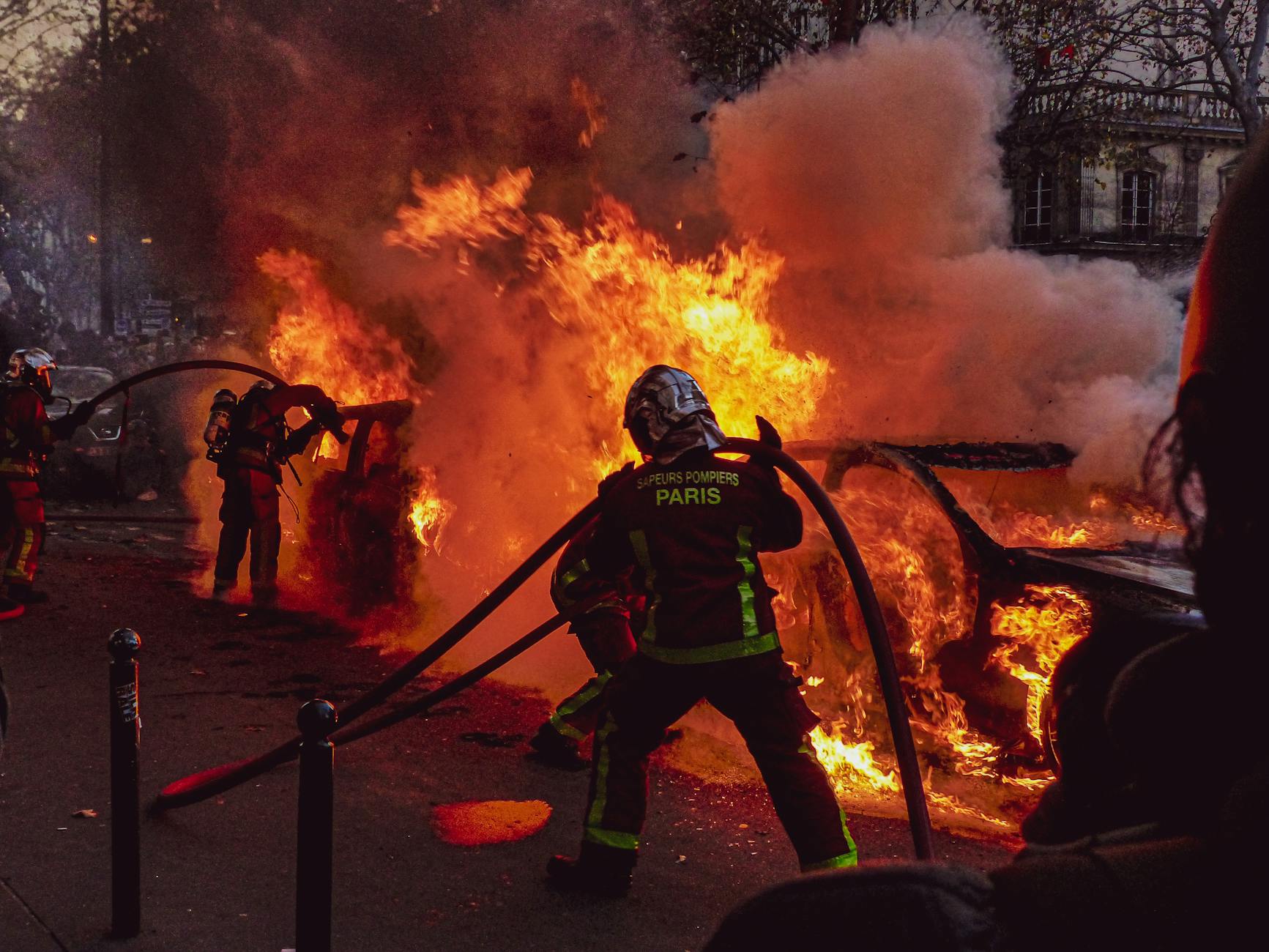
It’s 2025, and I am constantly inundated with newspaper articles reporting on freak weather. I think about all of those beautiful places where I have been to on our wonderful planet in the past ten years and realise that global warming truly is taking place. Right here, right now. Literally, everywhere I have been has been a victim of our unpredictable weather. Here are a few headlines of freak weather events that have taken place in those places in recent years.
RHODES: THOUSANDS FORCED TO FLEE ‘DISASTER FILM WILDFIRES’
VALENCIA – DEATH TOLL IN VALENCIA FLOODS OVER 200 WITH DOZENS STILL MISSING
MALAGA – HISTORIC FLOODS IN MALAGA LEAVE CITY PARALYSED
BAVARIA – GERMANY’S DEADLY FLOODS SPREAD ALONG DANUBE
LAKE COMO – LANDSLIDES AND FLOODS WASH AWAY ROADS OVERLOOKING LAKE COMO
CATALUNA – CATALONIA HIT BY OVER 30 MONTHS OF DROUGHT

ITALY – ITALY BRACES FOR RECORD HEATWAVE WITH RED ALERTS IN TWENTY-TWO CITIES
ANDALUCIA – CORDOBA BREAKS ALL-TIME APRIL RECORD OF 38.7 DEGREES
CROATIA – RED ALERT ISSUED IN CROATIA AS COUNTRY SWELTERS THROUGH HEATWAVE
PRAGUE – FLOODS DESTROY LIVES AND HOMES IN CZECH REPUBLIC
Our future is certainly looking rather uncertain. However, if we all do our part, we can make a difference and prevent a 1.5 degree temperature increase. Scientific experts claim that the latter is still possible if we take drastic measures now. Many don’t believe we have to act on an individual level as alone, we won’t be able to make a difference but if we all act together as individuals, we can certainly make a difference. Sharing ideas with others, however small can inspire others to do their bit to help our wonderful planet. There are many success stories we can aspire to. For instance, Finland has reduced their emissions by 52% since 2003 by phasing out the use of fossil fuels.
American Water, one of the largest utilities in the United States, has also made huge strides in sustainability. They’ve committed to reducing greenhouse gas emissions and improving water efficiency across their operations. It’s these kinds of corporate efforts, alongside individual action, that can truly shift the needle.
Norway are another country’s footsteps we should follow as they have reduced their emissions by taking measures such as promoting electric cars. In fact, 86% of cars in February 2022 were either plug-in hybrid or electric.

It is difficult to stay positive when forests around the world are burning and cities are underwater but we really need to keep positive and take things step by step. Change doesn’t happen overnight, it takes place gradually. Shenzhen, a megacity in China is proud to be home to the world’s first electric bus fleet in the world. Their buses formerly ran on diesel. The city is home to 16,000 electric buses and very soon 22000 taxis will convert to electric. Their smog issue is no longer an issue. Air is cleaner for those living there and the skies are clearer. Utilising public transport really does minimise the impact on our planet. Every time you move, think about the impact you are having on the world.
I have lived in Nottingham in the UK for almost my whole life now. In this article, I will discuss what we can do on a daily basis in order to be sustainable in our cities, whether that be at home or at work. My home city of Nottingham is aiming to become the first carbon-neutral city in the UK, something I am very proud of and wish to be part of. Our public transport system has come a long way. I am also proud of how many green spaces we have considering we are a small city. Here are a few tips on how we can be sustainable in the city.
The Arboretum, Nottingham. (Author’s archives)

Aim to be self-sufficient
I often look at the packaging of the food I buy. The parsley I bought this week was from Spain, my tomatoes from Morocco and my red onions from Norfolk. It goes without saying that we can’t produce all of our own food but if we all grew vegetables and herbs in our garden or bought more local produce, imagine how much less C02 would be emitted. We are completely spoilt with the choice of foods we have in our supermarkets but the cost on our planet is huge. In my garden, you can find rosemary, mint and parsley. I also have carrots and an apple tree growing. I’m not 100% there yet but I have started. I know people who have successfully grown leeks, carrots, potatoes, tomatoes and much more. If we were able to step out into our gardens and pick such foods, we would reduce carbon emissions as the food would be going directly from our gardens to our plates.
Using public transport
I feel privileged to have access to such a fantastic network of buses and trams in my city. Nottingham’s buses run on biogas meaning carbon emissions are reduced by 84% compared to a bus using diesel. The bus network covers the whole city meaning you really can travel anywhere. With exclusive use of bus lanes, bus journeys are often rapid. Our main bus company Nottingham City Transport has proudly won ‘UK’s bus operator of the year’ five times. Other cities should take a leaf out of our book and improve their systems making them more reliable and environmentally friendly. Every time I go to another city, I do use public transport but it is rarely to the same standard as my home city. Cities in the UK are pretty well connected and often going in the car means you’ll pay a hefty car parking fee so it is worth using public transport where possible. Nottingham also has a brilliant tram network connecting many towns to the centre. As a city, in 2020 we emitted 344,000 tonnes of Co2 through transport alone (mainly car emissions) which equated to 33% of our emissions so we do have work to do but I can already see the light at the end of the tunnel. It’s about building on the amazing things we have done so far. My city is also well-equipped for cyclists. We have a cycling network map, endless bike paths and many cycling groups.

Photo from Nottinghamshire Live
When I go to the capital, I often travel on either National Express or FlixBus. Both companies offer tickets for around £3.50 to £5 each way which is a complete bargain. Friends often say, why on earth would you go on the bus? They say the bus journey is too long but if you catch the bus to either Finchley Road or Golder’s Green the journey takes around two hours and fifteen minutes from Nottingham. It once took me two hours on the dot which was incredible. Once you arrive at Golder’s Green or Finchley Road, you can get straight on the underground. Finchley Road (Jubilee Line) is right next to Hampstead (a few stops from Bond Street and Westminster) and Golder’s Green (Northern Line) is right next to Camden Town. If you’re coming from the North of the UK, you should be able to get off at these stops reducing your travel time. It’s a no-brainer. Take the bus.

Buy locally
Since Covid, I feel that buying locally has increased in popularity. Eyes were opened up to things made by local people in our local communities and were placed in the limelight for the first time as we were limited to where we could travel to. Emissions during Covid were low. Many positives came out of Covid. The air became cleaner, nature came back to life and we saw dolphins returning to the Venice canals. Buying locally helps to support local people but also reduces carbon emissions. Buying online from companies based in China and abroad creates a huge carbon footprint. We all need to bear in mind the impact of our daily choices.
I really do try my best to avoid buying from companies constantly advertising fast fashion. It is challenging to resist buying online from such sites as we are constantly bombarded by adverts. Their adverts can be so enticing and their product ranges are immense but we have to resist. These companies pay their staff very little, treat them badly, make them work illegal hours and are destroying our planet for the sake of making greater profits. I’m not mentioning names but the company I have in mind apparently emitted 16.7 million metric tons of carbon dioxide in 2023 alone. This figure is equivalent to what more than four coal power stations emit annually. We are also bombarded with clothes haul videos on Instagram. In the UK we have become a throw-away society. Influencers pose in one outfit and it goes to landfill or a charity shop the following day. Many clothes from the UK end up in the Atacama Desert which is currently a dumping ground and markets across Ghana and India due to the fact that we simply don’t have enough space to store our own rubbish. It goes without saying that we have clothes to last us a lifetime. We are passing on our problem to other nations causing devastating consequences.
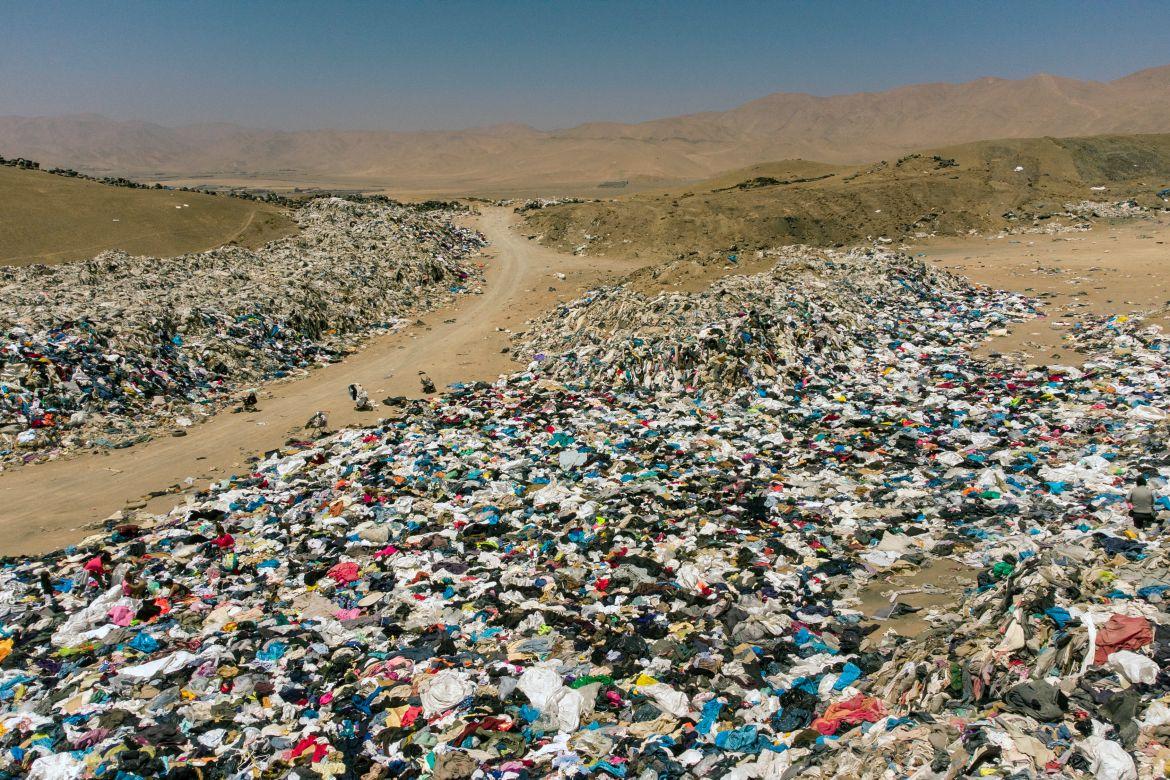
The ’fast-fashion graveyard’ in the Atacama Desert Chile – Photo taken from Aljazeera
When I go shopping in my city, I am keen to buy clothes made from recycled cotton or other materials. This is actually quite common to see in shops in the UK such as New Look or River Island. Our charity shops are filled to the brim. Sometimes charity shops don’t have the capacity to accept my donations and actually send me away.
We have a wonderful shop called White Rose in Nottingham, which now has branches across the Midlands and several other UK cities. White Rose has a wonderful selection of second-hand clothing and keeps up with the trends. The money raised goes towards the Aegis Trust who aim to prevent genocide. I once did some modelling for White Rose. I had to go to their warehouse and select out outfits for the photoshoot. I have never seen so many clothes. Mountains of clothes covered the floor. It was overwhelming. One other amazing aim of White Rose is to extend the lives of clothes through upcycling and repair as well as counteracting the environmental impact of fast fashion. Wherever you are in the world, try to buy more second-hand clothing as it reduces emissions, saves energy and water and prevents clothing from ending up in landfills.

At the workplace

I am a Spanish teacher but whenever I can, I share my knowledge about global warming with my students. Today in RSHE I showed the impact our clothes waste has on other countries. In this case the Atacama Desert. They were in shock. In the past, I have done surveys with students asking them what they do at home to be environmentally friendly and what they could do. I also asked them what we could do at school to help. One student last year suggested that students should be given five house points for anything they do to help the planet. I told him I would put it in the staff suggestions box. I did. We can now give ‘eco’ points to students. It worked. We need to listen to young people. They are the ones who are going to suffer more from the effects of climate change if action is not taken.
Around school, if I see lights left on, I turn them off. I recycle all waste paper in our recycling bins and always encourage students to. Whether you work in an office, a school or elsewhere, what can you do? If you have any ideas, tell your boss and encourage them to put such initiatives in place.

Two years ago, I went to the headteacher and asked him if we could turn an abandoned patch of land into a garden. He responded ‘’Go ahead’’. I replied ‘’I don’t really know anything about gardening but I will do my best’’. I firstly asked local people for plants. I was overwhelmed by the kindness of local people. One lady invited me into her garden, spoke about her plants for over one hour explaining when to plant them and then kindly gave me about twenty plants. In the school garden we grew endless flowers, parsley, courgettes and much more. We planted bulbs ready for the spring producing daffodils, crocuses and tulips. The courgettes we grew were huge and were cooked by the school cooks and put into a roasted vegetable salad. We are currently growing leeks, parsley, rosemary, thyme and much more. We got involved with a project called ‘from grey to green’ who kindly gave us money to buy plants and trees. We have a cherry tree, two apple trees, a plum tree and a pear tree. We still have a lot of work to do but we have started. The children love getting involved and our project will hopefully provide them with skills for life. Getting involved with the school garden has inspired me to grow things in my own little garden. Every day when I get home from school I go straight to my garden to see what has grown. I feel happier because I know my plants are taking in carbon dioxide and it helps my mental health. It is a wonderful feeling to think that thanks to me something amazing has grown.
Food waste and composting
It’s shocking to learn that The UK throws 9.3 million tonnes of food away per year despite up to 783 million people facing hunger in 2022 according to the UN. A huge issue with food waste is that when it rots away, methane is produced. Unfortunately, methane is twenty-five times more harmful than carbon dioxide. I personally throw very little food away. I buy what I need and if I do throw anything away which is rarely, I feel awful. If I think to myself that I won’t be able to use something, I give it to a family member or I put it in the freezer. I am aware that a lot of food waste in the city derives from hotels, restaurants and supermarkets. Whenever I can, I use an app called ‘Too good to go’. The app allows you to purchase remaining food from food outlets around the city at the end of the day for a reduced price that would have otherwise gone straight in the bin. I often do this at the end of the day if I am in the city centre. I love the app as you get the chance to try different foods from restaurants and cafes across the city whilst helping our planet at the same time. It also tells you how much Co2 you have saved. One of my favourite Too Good To Go’s was from Waterstones in Edinburgh. I paid about £3.99 for two banoffee cakes, two packs of sandwiches and two scones. It was fantastic. I also like Café Neros bags which are often full of cookies, muffins and croissants. It’s also great to see how much Co2 you have saved. You must remember that a lot for Co2 was used to make the product in the first place and transport would be required to take the waste to the landfill site. Too Good To Go has saved over fifty million bags of food since it started up. Give it a go!

It’s also worth checking out OLIO. OLIO allows you to pick up unwanted food from local people. They also have ambassadors who collect boxes of food from local supermarkets which would have otherwise gone to landfill and make it available on the app for local people to enjoy. This helps to reduce the waste produced by supermarkets.
Plant trees
Everybody knows that trees absorb carbon dioxide. Well, let’s plant more! Nottinghamshire City Council pledged to plant 250000 trees by 2027 in order to help us reach our carbon-neutral goal. The council gave endless tree saplings to local people to plant. A tree absorbs 48 pounds of carbon dioxide a year. The more trees we grow, the cleaner our air will be. The majority of countries that are already carbon neutral have huge forest cover so more carbon dioxide is absorbed than emitted. This isn’t the case for larger cities and towns but we can still play our part in reducing the carbon dioxide we emit.
What is your impact?
Are you helping to reduce our increasing global temperature or are you heating up our planet? What do you already do? Can you encourage others to do the positive things you do? Please start to think more about your impact and inspire others around you. At times, it seems like an impossible challenge. Especially when certain world leaders are telling the world that global warming is ‘’one of the greatest scams of all time’’. Let’s think positively and think about those countries and cities that have been successful. If we all work together we can make an impact and tackle climate change.
 Life Lovers Magazine®