


There is a particular freedom in being able to open your laptop almost anywhere in the world and know that work can come with you. A café in Lisbon, a hotel room in Edinburgh, an airport lounge where the Wi-Fi is surprisingly good and the coffee is, predictably, not. For women building careers through freelancing, remote work or a side hustle, the ability to work from different places can change more than the location of your desk. It can change how you think about work itself.
Perhaps that was the point all along. You did not start freelancing because you dreamed of spending your evenings dealing with payment reconciliation. You started because you wanted more freedom: to travel, leave a job that no longer suited you, earn money on your own terms or simply have more control over your working life. Then the business grew. More clients appeared, more invoices went out, customers started arriving from different countries and the side hustle that once fitted neatly around your life began demanding a little more space in it.
This is when some of the systems that worked perfectly well at the beginning can start becoming a problem. Payments are a good example. When you have a handful of clients, a simple invoice and familiar payment method might be all you need. As your business grows, however, payment becomes part of the experience you offer customers — and part of the infrastructure supporting the life you are trying to build. It is not particularly glamorous, but neither is doing your taxes, and both have an irritating habit of becoming important.
When Your Business Starts Growing Up
Most businesses begin with a certain amount of improvisation. You find a way to invoice a client, accept whatever payment method seems easiest and keep track of everything in a spreadsheet that becomes increasingly elaborate. Then one day, you realise you are no longer entirely sure what half the columns are doing.
The warning signs that your original setup is no longer keeping pace can be surprisingly ordinary: customers complaining about failed transactions, a slow checkout process, or too much time spent matching payments and dealing with disputes. If you still need to manually take credit cards over the phone, something that may have seemed perfectly manageable when you were starting out can become increasingly inefficient and less secure as your business grows. More declined transactions or difficulty accepting newer payment methods can be another indication that it is time for a rethink.
None of this means you have done anything wrong. Quite the opposite. Sometimes these frustrations are simply evidence that the business you started has become bigger than the business you originally imagined.
When Your Office Is Wherever You Are
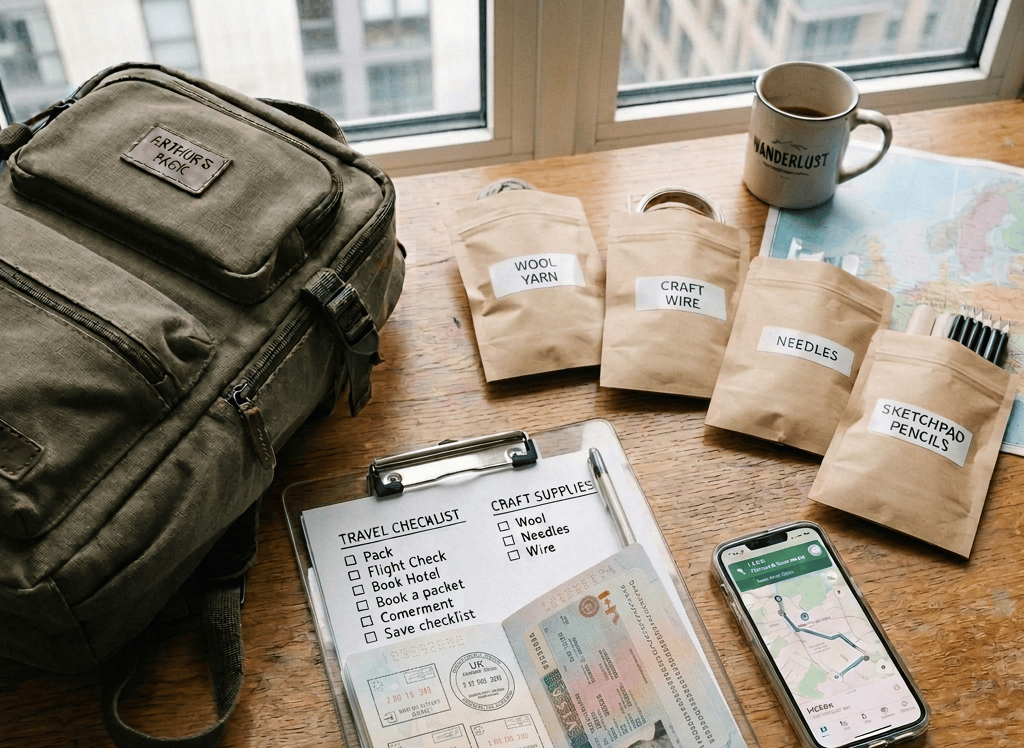
One of the great attractions of remote work is that a career no longer has to be tied to one particular place. Your clients might be in London while you are in Barcelona, or you might spend a few months working from one country before moving somewhere else. Perhaps you travel frequently for pleasure but still need to keep your business running while you are away.
The reality, of course, is usually less glamorous than the Instagram version. There are airport delays, unreliable Wi-Fi, different time zones, forgotten chargers and the occasional morning spent working from a hotel room when you would much rather be exploring the city. Still, there is something powerful about knowing that your income does not necessarily require you to be in one particular place.
Once your customers are international, however, they are likely to expect the same ease and familiarity when paying for your services or products as they would from a business closer to home. Someone in Europe may prefer SEPA Direct Debit, while a customer in China may be more comfortable using Alipay. Elsewhere, regional bank transfers, digital wallets or local currencies can make the difference between someone wanting to buy from you and actually completing the purchase.
For a small business competing internationally, trust matters. You may not have a huge office or a customer-service department working around the clock, but you can still make the experience of dealing with you feel professional, reliable and straightforward. That can go a surprisingly long way.
The Quiet Business Behind the Adventure
There is an uncomfortable irony in building a business for freedom and then allowing its administration to consume that freedom. You wanted to work from anywhere, yet you find yourself spending Sunday evening checking payments. You wanted more time to travel, but you are chasing an international transaction that has disappeared somewhere between two banks. You wanted a side hustle that might eventually give you choices, but have accidentally created another job that depends on you remembering every tiny detail.
This is where good payment infrastructure becomes less about technology and more about time. Modern payment gateways can include tools such as fraud detection, tokenisation and integrations with e-commerce platforms, accounting software and customer relationship management systems. Tokenisation, for example, replaces sensitive card information with a unique token, helping reduce the exposure of valuable payment data.
You do not need to become a payment technology expert. The point is simply to create systems that work quietly in the background, leaving more time for the things that actually require you: your clients, your ideas, your work and, occasionally, your plane ticket.
Busy Months, Quiet Months and Real Life
There is another part of running a flexible business that rarely appears in the glossy version: income is not always predictable. One month can be wonderfully busy and the next suspiciously quiet. A freelance project lands, a client leaves, a seasonal business suddenly takes off, and then the orders slow down again.
Learning how to stay financially steady during busy and quiet periods is therefore just as important as increasing sales. That might mean keeping some income aside during stronger months, understanding your regular costs and knowing what happens when business slows down. It also means resisting the temptation to assume that today’s income is a guarantee of tomorrow’s.
For women building independent careers, financial stability may not be particularly exciting to discuss, but it is deeply empowering. The more predictable your finances become, the more freedom you have to make decisions based on what you actually want. You can take the trip, turn down the client who is clearly going to become a problem, invest in the next stage of your business or simply take a quieter month without immediately panicking.
As your business grows, payments can also tell you something about the people buying from you. A good payment system can provide Unit4 reporting and analytics around authorisation rates, chargebacks, transaction costs and failed payments, revealing patterns that are difficult to spot when everything is managed manually.

Let the Numbers Help You, Not Haunt You
As your business grows, payments can also tell you something about the people buying from you. A good payment system can provide reporting and analytics around authorisation rates, chargebacks, transaction costs and failed payments, revealing patterns that are difficult to spot when everything is managed manually.
Perhaps customers in one market are experiencing more failed transactions, or a payment method you introduced has become unexpectedly popular. Maybe recurring payments are failing more often than you realised. These details are not merely technical problems; they are clues about where customers are struggling and where your business could improve.
With the rise of digital and interconnected commerce, the landscape has undergone significant changes, with organizations like the Federal Reserve Board’s payment systems and new payment systems being developed to navigate these changes. For a small business owner, though, you do not need to follow every development in financial technology. You simply need enough information to make better decisions.
Building Something That Can Move With You
There is a tendency to think of business growth as a straight line: more clients, more sales, more employees, bigger office, bigger everything. But that is not the only definition of success.
Perhaps your ambition is to build a consultancy you can run from different countries. Perhaps you want a side hustle that eventually allows you to leave your full-time job. Perhaps you simply want enough independent income to travel more, work fewer hours or stop asking permission every time you need a day off.
The point is that growth should serve something. Your business does not have to become enormous to be successful; it has to become sustainable enough to support the life you want. That means thinking about the less glamorous parts of the business before they become emergencies, including secure and flexible payment systems, sensible financial planning and processes that reduce the amount of work only you can do.
Because there is a difference between owning a business and being trapped inside one.
The Freedom to Change Your Mind
Perhaps the most underrated benefit of building a flexible career is not the ability to work from a beach. Frankly, beaches are terrible places to work: sand gets everywhere and the sun makes it impossible to see your screen. The real freedom is having choices.
You can decide where you want to live for a while, travel without completely switching off your income, change direction when an opportunity appears or turn a side hustle into a career. Your priorities may change, too. The things you wanted in your twenties may not be the things you want in your thirties. You may care more about time than titles, experiences than possessions, and flexibility than a corner office.
That is why the business you build needs room to change with you. A payment system will never be the reason you became a freelancer, changed careers or decided to build something of your own. But the right systems can make it easier to keep going, without turning every new opportunity or destination into another logistical headache.
Ultimately, building a business around the life you want is not about working everywhere, all the time. It is not about turning every holiday into a workation or answering emails from every corner of the planet. It is about having the freedom to decide: to work when it matters, travel when you want to, grow when it feels right and slow down when you need to.
And, every now and then, to put the laptop away and actually see the place you travelled all that way to see.

