
By Sabina Moorie
Cape Greco sits at the southeastern tip of Cyprus, a limestone headland wedged between the Greek’s Ayia Napa and Protaras. In summer, coaches trundle along the road between the two resort towns, usually stopping long enough for visitors to take a photograph, admire the view and get back on the coach before anyone starts asking where the toilets are. It is a shame, because Cape Greco deserves considerably more time than that.
The headland forms part of a Natura 2000 protected area, designated as Kavo Gkreko in 2008, covering almost 1,875 hectares, around half of which is marine territory. Beneath the cliffs, Posidonia seagrass meadows form part of the protected environment, making this more than a particularly photogenic stretch of coastline.
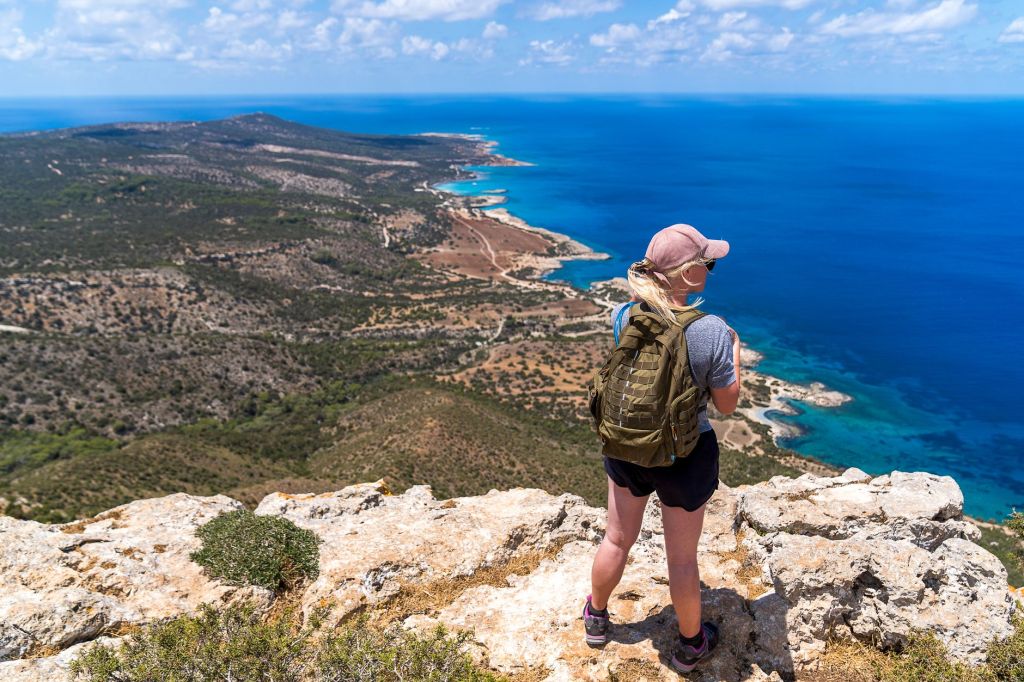
Walking is also one of the best ways to understand the place. Once you leave the viewpoints behind, the headland becomes a mixture of pine covered paths, exposed limestone, sea caves, cliffs and strangely sculpted rock formations, with the Mediterranean doing its usual convincing impression of a postcard.
Caves, Cliffs and a Bridge That Needs No Help
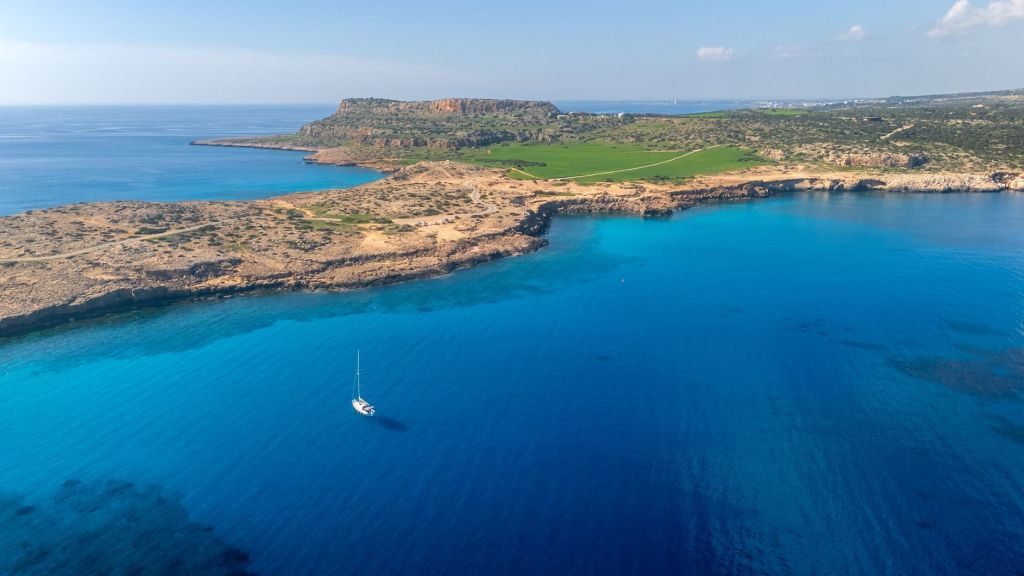
The sea caves on the Ayia Napa side are among Cape Greco’s most photographed sights, although the name can be slightly misleading if you arrive expecting to wander inside them with a camera. The caves are accessible from the water, either by boat or by swimming, while the walking trail follows the cliffs above them. On a calm day, that is a pleasant way to see the coastline. When the sea is rough, you become rather more aware of the drop.
Further east is Kamara tou Koraka, known as the Raven’s Bridge, a natural rock arch carved by erosion. It is one of the headland’s most recognisable formations and also one of the reasons you should take the fences seriously. The arch has been weakened by erosion and is considered unstable, yet people still seem determined to climb where they have been specifically told not to climb. Apparently, a warning sign is merely a suggestion to some.
Choosing Where to Stay
Cape Greco lies between Ayia Napa and Protaras, so choosing between Ayia Napa and Protaras can be as much about your walking plans as your evening entertainment.
Protaras gives you the easier access to Konnos Bay, a pine backed cove on the northern side of the headland. From here, the Konnoi to Agioi Anargyroi trail covers around 4.8 kilometres to the small whitewashed chapel of Agioi Anargyroi, dedicated to Saints Cosmas and Damian. The chapel sits dramatically close to the cliff edge and makes a particularly good destination if you like your walks to come with a sense of arrival.
The route takes roughly two hours, depending on how often you stop to admire the view, take photographs or reconsider your life choices on a particularly rocky section. From the Ayia Napa side, the circular sea caves trail covers around 3.6 kilometres and begins on the Cape Greco road, approximately six kilometres east of the town.
Getting around requires a little thought. Public transport does not reach the interior of the park, and several of the more interesting walks are linear rather than circular. If you have someone willing to drop you at one trailhead and collect you at another, excellent. If not, choose a circular route unless you particularly enjoy discovering that your car is several kilometres away and your legs have filed a formal complaint.
This Is Not a Midday August Walk
The scenery may look inviting, but Cape Greco’s summer temperatures deserve respect. August is the hottest month, with average daily highs around 31°C, while temperatures regularly remain above 28°C from mid June into early October.
Much of the headland is completely exposed, with limited shade once you leave the pine trees around Konnos. Walking the open sections between roughly eleven in the morning and four in the afternoon during the height of summer is therefore less a test of endurance than an entirely avoidable mistake.
Start early. You will avoid the worst of the heat, see the landscape before it becomes busy and have considerably more energy left for lunch afterwards, which is an important part of any sensible walking strategy.
There are no taps or shops along the trails, so bring plenty of water. The usual recommendation of around one litre per person for every two hours of walking should be considered a minimum during July and August rather than an ambitious hydration goal. The Konnos end has beach facilities during the season, but you should not rely on finding refreshments once you are deeper inside the park.
Footwear is another matter worth taking seriously. The terrain may look relatively gentle from a distance, but the limestone is uneven, weathered and often covered with loose grit. Flip flops are better suited to the beach than to a rocky coastal trail, and thin soled sandals are unlikely to thank you either. Proper trainers are the minimum sensible option.
The 2.5 kilometre Kavos circular route from the old quarry car park is slightly more demanding than many of the other paths, partly because of its rough limestone surface, which is scattered with fossilised marine organisms. It is a fascinating reminder that the landscape beneath your feet has a considerably longer history than your holiday.
Where to Start
Cape Greco is free to enter, with no gates and no closing time, although that does not mean every part of it is sensible to explore whenever you fancy it.
Agioi Anargyroi is one of the most useful starting points. The chapel is only a few metres from the car park and several waymarked routes begin here, including a 2.3 kilometre circular walk, a four kilometre route towards the sea caves and a longer link towards Konnos.
The area has also changed in recent years. The French radio antennas that had stood above the cape since the 1970s were removed in 2024, opening up land that had been fenced off for decades. For walkers, that means more space to explore and a slightly clearer sense of the headland as a natural landscape rather than somewhere with an assortment of infrastructure accidentally parked on top of it.
Cape Greco Is Better at Walking Pace
Cape Greco is easy to underestimate when you see it from a coach window. The famous viewpoints are certainly worth stopping for, but they reveal only a small part of the headland.
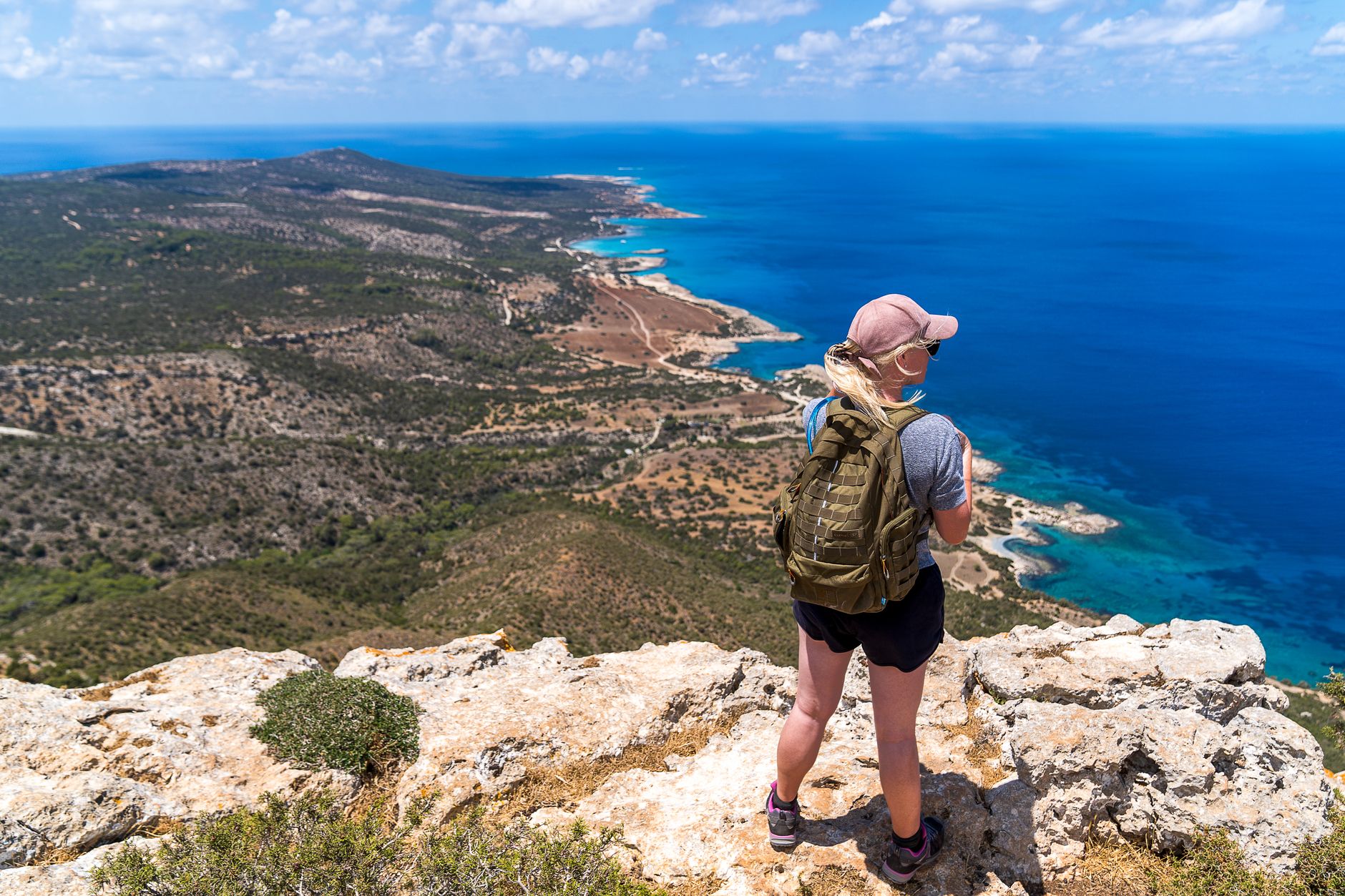
Walk a little further and the landscape changes constantly. Pine trees give way to exposed limestone, cliffs open onto wide Mediterranean views and the sea caves appear below the paths. There is enough variety to make several different walks worthwhile, particularly if you start early and take your time.
For a first visit, the Agioi Anargyroi and Konnos Bay routes offer a good balance of scenery and accessibility. The sea cave paths are a good option if you want something shorter, while more confident walkers can tackle some of the rougher limestone sections.
Whatever route you choose, stay on the marked paths and respect the barriers around unstable cliffs and Kamara tou Koraka. There is no prize for getting closer to the edge than everyone else.
Cape Greco is at its best when you give it more than fifteen minutes and a compulsory photograph. Start early, carry enough water, wear proper shoes and let the landscape unfold at walking pace. The resorts may be what brings many visitors to this corner of Cyprus, but the headland itself is the reason you should stay out a little longer.

