
by Sam Oakley
I have always been slightly suspicious of the idea that adventure has to look adventurous. You know the type. There is usually a dramatic mountain involved, somebody wearing several layers of technical clothing and a photograph taken at precisely the right moment to suggest that they have just conquered both nature and their own personal limitations. It is beautiful, certainly, but it can also make the rest of us feel as though our own version of adventure does not quite qualify. The older I get, the more I have realised that adventure is less about where you go and much more about what happens when you become properly absorbed in what you are doing.
Climbing taught me that rather quickly. There is very little room for thinking about emails, laundry or the vague feeling that you ought to be doing something more productive when you are standing at the bottom of a wall trying to work out how you are supposed to get from one hold to another. Your entire attention is there, along with your hands, feet, balance and the rather humbling realisation that your body does not always agree with the plan your brain has just produced. Bouldering is particularly good at this. There are no ropes or enormous mountain faces required, just a wall covered in brightly coloured holds and a series of problems that look considerably easier when somebody else is doing them.
You climb, fall, reconsider, try again and occasionally discover that the move you were convinced was impossible was actually possible all along. There is something wonderfully uncomplicated about that process. Climbing makes failure feel ordinary. You do not need to have a lengthy internal meeting about what went wrong or spend the rest of the evening wondering what the failed attempt says about you as a person. You adjust your foot, change your grip and have another go. For anyone who spends a suspicious amount of time overthinking things, this can be remarkably useful.
That feeling has stayed with me beyond the climbing wall. It has made me think differently about the way we travel, exercise and even move through places we already know. Perhaps we do not always need to get away from ordinary life to find adventure. Perhaps we simply need to become more curious about it.
Adventure Does Not Always Require a Plane Ticket
I used to associate outdoor adventure with escape. You went somewhere dramatic, preferably somewhere with mountains, forests or an alarming absence of mobile phone reception, and then you had an adventure. The idea that something could be adventurous while still fitting neatly between work and dinner seemed rather less convincing. Yet the more time I spend climbing, walking and exploring outdoors, the less interested I am in the idea that an adventure has to be a major event.
An indoor bouldering session can happen after work. A run can take you along a route you have never explored. A kayak can turn an ordinary stretch of water into an entirely different landscape. A bike can take you through parts of your own city that you have somehow managed to ignore for years. None of these requires a major expedition, and that is precisely what makes them useful. They can exist alongside ordinary life rather than requiring us to put ordinary life on hold.
Climbing also has a way of making failure feel refreshingly normal. You look at a route, decide that you know exactly what you are doing, discover that you absolutely do not, fall off and start again. There is no lengthy internal debate about whether you are naturally talented enough to be doing this. You simply work out what might have gone wrong and try a different approach. It is physical problem solving in its purest form, and I suspect that is part of what makes it so satisfying. You are not simply getting stronger. You are figuring things out.
That has applications beyond climbing. There are plenty of moments in everyday life when we could probably benefit from treating mistakes with the same practicality. Sometimes the answer is not to analyse everything to death, but to move your foot somewhere else and have another go.
The Health Benefits Are Only Part of the Story
The physical benefits of being active outdoors are obvious enough, but what interests me more is what happens mentally when we stop being spectators of our own lives. There is a particular difference between sitting somewhere beautiful and actually moving through it. Walking, climbing, cycling, kayaking and trail running demand that you pay attention to where you are, and that attention can be surprisingly difficult to find in ordinary life.
Research into the mental health benefits of nature has linked time spent in natural environments with reduced stress and improvements in mood and psychological wellbeing. That makes intuitive sense when you think about how rarely most of us spend an entire hour doing something without simultaneously checking a screen, answering a message or thinking about what comes next. Being outside does not magically solve every problem, but it can create enough distance from the usual noise to make things feel a little clearer.
The same principle can apply indoors when the activity requires genuine concentration. Bouldering, for example, involves coordination, strength, balance and problem solving. For that hour, the only pressing question is whether your left foot can reach the next hold without making the whole route considerably more complicated than it needs to be. Your inbox can wait. The world will survive without your immediate response to whatever someone has just sent you.
I have started to appreciate that rest does not always mean lying down. Sometimes rest is giving your brain a completely different problem to solve. There is something quite restorative about finishing a physically demanding session and realising that you have spent the past hour thinking about absolutely nothing except where to put your feet.
You Do Not Have to Live Beside a Mountain
There are places where outdoor culture is so deeply woven into everyday life that it is almost impossible not to be drawn into it. Living in Boulder, Colorado, for example, puts hiking, climbing and trail running within easy reach, making outdoor activity feel less like a special event and more like part of the rhythm of everyday life. For anyone who enjoys being active outside, that kind of landscape must make it considerably easier to build adventure into an ordinary week.
Most of us are not quite so fortunate. I cannot step outside and casually find myself at the foot of a spectacular mountain range, and I suspect most readers have similarly modest geography to contend with. But the more I have travelled and spent time outdoors, the more I have realised that waiting for the perfect landscape is an excellent way to spend your life waiting.
A city can have climbing centres, cycle routes and parks. A coastline can offer kayaking, paddleboarding or swimming. A small town might have woodland trails, rivers or hills. Even somewhere you have lived for years can reveal another side of itself if you walk a different route, cycle instead of drive or simply decide to see what is beyond the familiar path.
The change is often less geographical than psychological. Instead of asking where you can go for an adventure, ask what you can do where you already are. That question makes adventure considerably more accessible, particularly for women whose lives are already full of work, family, responsibilities and the many small logistical negotiations required to get through an average week.
Start Indoors, Then See Where It Takes You
One of the things I particularly like about bouldering is that it removes some of the intimidation from climbing. You can walk into a centre without knowing how to tie complicated knots or having any idea what half the equipment is called. You can take a beginner session, learn how the wall works and discover whether you actually enjoy hanging onto it. You may also discover muscles you were not previously aware you possessed, which tends to be an entertaining surprise the following morning.
From there, things can develop naturally. An indoor session can lead to an outdoor climbing course. That can lead to a weekend somewhere new, followed by a climbing holiday somewhere you might never otherwise have considered visiting. Suddenly an activity has become a reason to travel, and travel has acquired a new purpose beyond sightseeing.
I think that is one of the most interesting things about outdoor pursuits. They can change the way we experience a destination. Instead of arriving somewhere and asking what there is to see, you might arrive knowing that you want to climb, hike, surf, cycle or paddle. The activity becomes a way into the landscape and, often, into the local community as well.
The same thing happens with running. A running route can take you away from the obvious tourist streets and towards neighbourhoods, parks and coastlines you might otherwise miss. A hiking trip can introduce you to a landscape at walking pace rather than through a car window. Kayaking can make a familiar coastline look completely different from the water. The benefits of outdoor adventures are therefore not simply about fitness. They can change the way we experience a place and, sometimes, the way we experience ourselves in it.
The Stories That Make You Want to Go
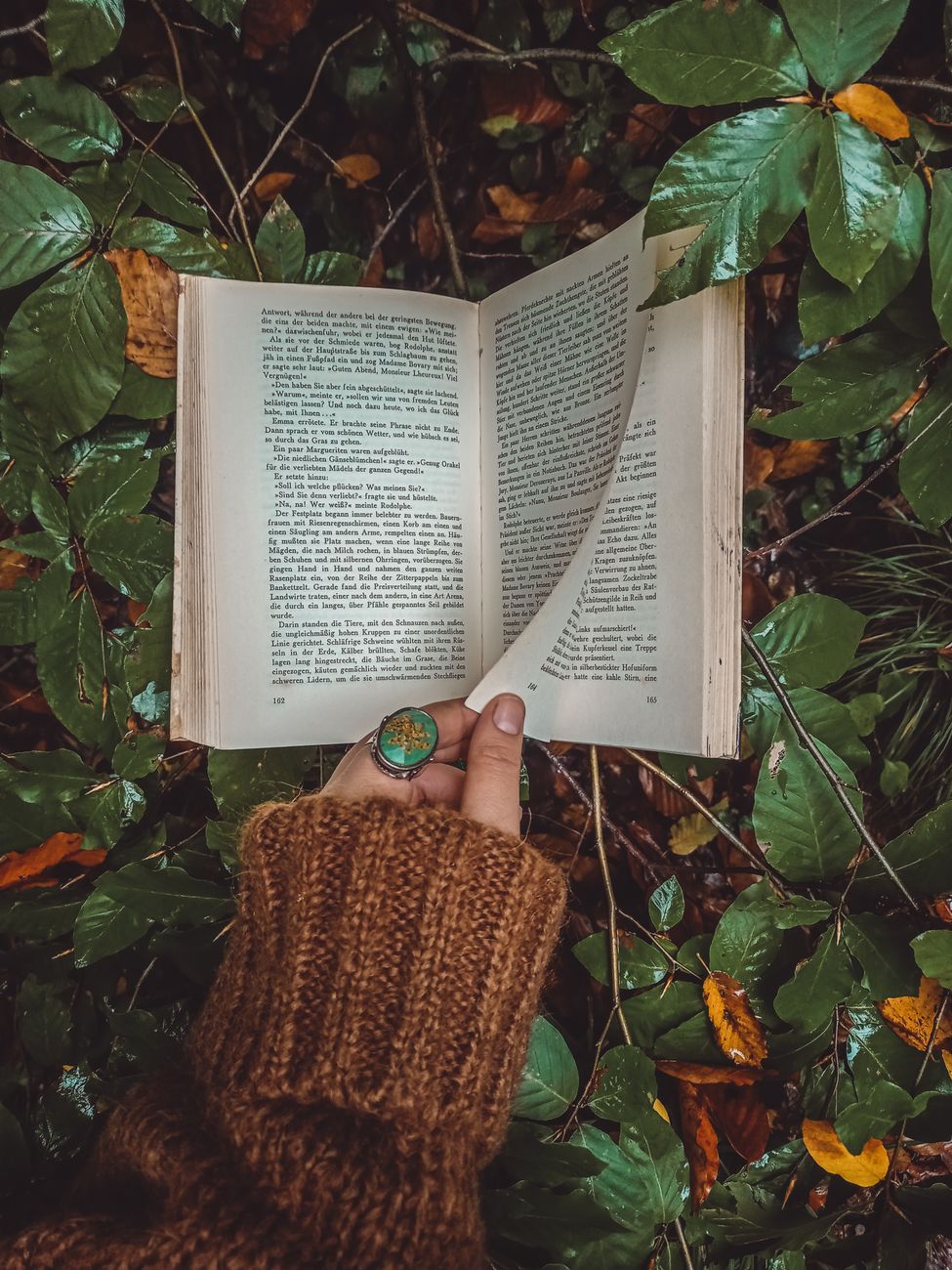
Of course, sometimes you need a little inspiration before you actually get off the sofa. Books and films have always played a strange role in adventure. They allow us to experience somebody else’s journey while quietly planting the idea that perhaps we should have one of our own. Some are particularly good at making the world outside our routines seem larger, more interesting and slightly harder to resist.
Into the Wild is probably the obvious place to start. Jon Krakauer’s book and the film adaptation have inspired generations of people to look at maps with considerably more ambition than common sense. The story of Christopher McCandless is complicated and ultimately tragic, so it is not exactly a straightforward advertisement for wandering off into the wilderness with a backpack and an optimistic attitude. Yet the appeal of the story is understandable. There is something powerful about the desire to step outside the life you are expected to live and discover what exists beyond it. It is perhaps best enjoyed alongside the reminder that adventure and preparation should ideally remain friends.
Wild, both Cheryl Strayed’s memoir and the film starring Reese Witherspoon, offers a very different kind of journey. The Pacific Crest Trail becomes the setting for a deeply personal attempt to work through grief, loss and a life that has become difficult to recognise. What makes it compelling is that the landscape is never simply scenery. The physical journey becomes part of the emotional one, and walking becomes a way of thinking, processing and gradually finding a different relationship with yourself.
Then there is Free Solo, which is enough to make most people reconsider their definition of a relaxing weekend. Watching Alex Honnold climb El Capitan without ropes is extraordinary, although it may not be the most sensible film to watch immediately before your first climbing session if you are already nervous. What it does capture beautifully is the extraordinary level of concentration that climbing can demand. Honnold’s experience is obviously at an extreme level, but that quality of being completely absorbed in the present is familiar even in the much less terrifying world of an indoor bouldering wall.
For something lighter, A Walk in the Woods, based on Bill Bryson’s book, is a reminder that outdoor adventures do not have to involve heroic physical achievement. Sometimes they involve two people discovering that the trail is considerably harder than it looked on the map. There is something reassuring about that. Adventure can be funny, uncomfortable, badly planned and slightly ridiculous, which is probably closer to most people’s actual experience than the perfectly framed mountain photograph would have us believe.
These stories keep the idea of movement alive when everyday life becomes repetitive. They remind us that there is a world outside our routines, even if the first step towards it is simply opening a book, watching a film and thinking that perhaps it is time to go somewhere.
Make Adventure Part of Ordinary Life
The real challenge, I have found, is not necessarily finding spectacular adventures. It is making enough space for smaller ones that they become part of your life rather than something you promise yourself you will do one day. There is always a reason to wait. Work is busy, the weather is wrong, the weekend disappears, the trip costs more than expected or you decide that you will start properly next month. Eventually, next month becomes next year.
A better approach is to make the activity small enough that you can actually do it. That might mean booking an evening at the climbing centre each week, walking before work, cycling to meet a friend or exploring a new trail once a month. It might mean taking a train to a nearby town and walking home, finding a swimming spot you have never tried or spending a Saturday morning outside without deciding in advance that it needs to be productive.
This is where local nature spots become so useful. You do not need a national park to feel the difference of being outside. A stretch of woodland, a city park, a canal path or a patch of coastline can be enough to break the pattern of your usual week. The important thing is to stop assuming that somewhere has to be spectacular before it is worth exploring.
Once you start looking, familiar places can become surprisingly interesting. The river you have ignored for years becomes a possible kayaking route. The climbing centre you assumed was full of professional athletes turns out to have beginners climbing beside people who have been doing it for years. The hill you normally drive past becomes a walking route. A familiar city suddenly has dozens of places you have never properly explored.
Adventure becomes less about escape and more about attention. It becomes a way of engaging with the places around you rather than constantly waiting for the next holiday to begin.
You Do Not Need to Become an Adventure Person
There is a particular kind of outdoor culture that can make you feel as though you need to buy a van, acquire an impressive collection of waterproofs and develop strong opinions about technical equipment before you are allowed to participate. You do not. You can simply find something you enjoy and become slightly better at it over time.
For me, that might be climbing or bouldering. For someone else it could be cycling through a new city, hiking, surfing, kayaking or trail running. The important thing is not whether the activity looks impressive. It is whether it makes you feel present, curious and slightly more alive than you did before you started.
Perhaps that is why I keep coming back to the idea that the world is your climbing wall. Not literally, thankfully, because some of us have enough difficulty navigating an actual climbing wall without trying to scale the side of a hotel. It is more about the mindset. Climbing can take you to Greece, Spain, Slovenia or somewhere much closer to home. Running can become a reason to discover a new city. Hiking can introduce you to landscapes and communities you would otherwise never encounter. A book can make you want to follow a trail, while a film can make you curious about a mountain.
Adventure does not necessarily require more money, more time or a dramatic reinvention of your life. Sometimes it simply requires you to try something you have never tried before and accept that you might be terrible at it initially. That is one of the nicest things about starting something new. You get to be a beginner again, and there is something wonderfully freeing about doing something without already knowing how it is supposed to turn out.
Perhaps that is what keeps drawing me back to climbing and to outdoor adventures more generally. They remind me that travel does not always begin at an airport, and that discovery does not necessarily require a distant destination. Sometimes it begins with finding a wall, a trail, a river or a stretch of coastline and deciding to see what happens if you take the unfamiliar route.

