
By Sam Oakley

There are certain things you do in New York because they feel like part of the deal. You walk through Central Park, even if your feet are already complaining. You look up at the Empire State Building. You eat something you probably would not normally consider breakfast because apparently pancakes at 10am are perfectly acceptable here. And, sooner or later, you find yourself wondering whether you should see a Broadway show.
Perhaps Broadway has never particularly been your thing. Maybe you have never memorised a musical soundtrack, do not know your Sondheim from your Shakespeare and have absolutely no idea what the difference is between the orchestra and the mezzanine. None of this disqualifies you. In fact, Broadway is one of those New York experiences that can be far more enjoyable when you arrive without feeling that you need to prove your theatre credentials.
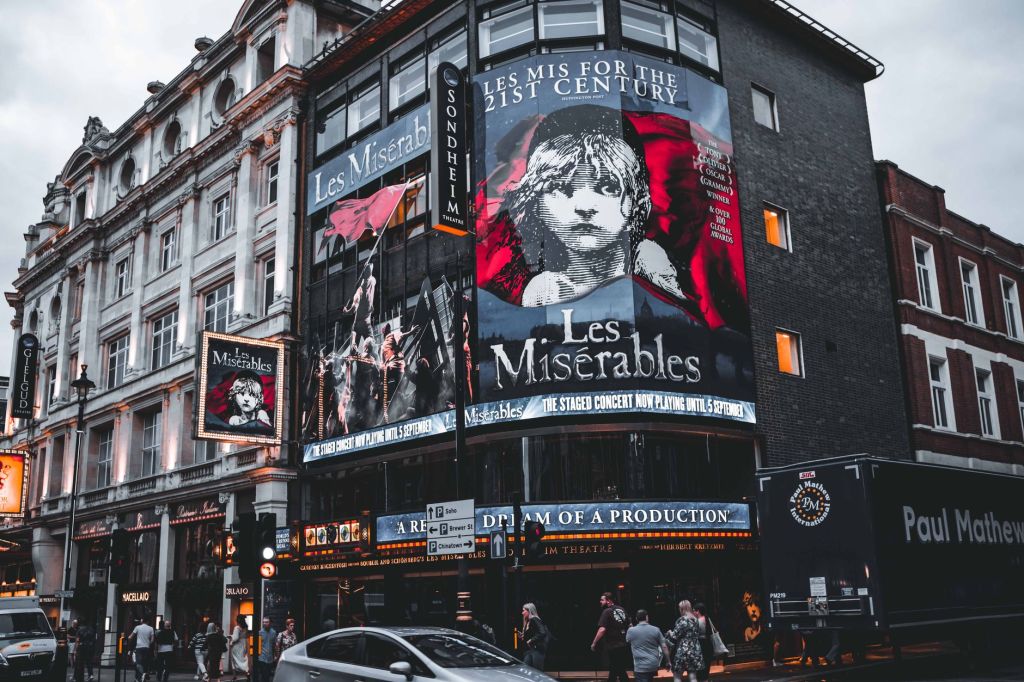
There is something wonderfully cinematic about approaching the Theatre District for the first time. The marquees begin appearing above the streets, the names of productions glow against the buildings and people stream towards the theatres as the city moves into evening. You might have seen some of those names on posters, in films or on television, but seeing them lit up above an actual theatre in Manhattan feels different. It suddenly becomes less of a thing you have watched from afar and more of a place you are about to enter.
That is the real appeal of putting Broadway on your New York bucket list. It is not necessarily about becoming a theatre person. It is about giving yourself an evening that feels distinctly New York, even if you know very little about what happens behind the curtain.
Choose a Show You Actually Want to See
The first hurdle is choosing what to watch, and this can feel rather like standing in front of a restaurant menu with 47 options and suddenly forgetting what food is. Broadway has musicals, plays, long running favourites and newer productions, with everything from enormous spectacles to much more intimate stories. The Broadway League’s current listings cover both musicals and plays, alongside information about rush tickets, lotteries and other ways to see particular productions.
You do not need to choose the most famous show simply because everyone else has heard of it. If you love a particular type of music, a good story, comedy, romance, drama or spectacular costumes, start there. A show that genuinely interests you is far more likely to make a memorable first Broadway experience than one you booked simply because it appeared on every list of “things you must do in New York”.
It is also worth checking the running time and subject matter before buying. Broadway performances can vary considerably in length, and some run for three hours or more, while shorter productions may have no interval at all. If you are planning dinner afterwards or have spent the day walking around Manhattan, knowing whether you are committing to two hours or most of your evening is useful information.
And if you are travelling with friends, make the decision together. Broadway is considerably more fun when nobody spends the first act wondering why they have been dragged to a show about something they never wanted to see.
Buy Your Tickets From the Right Place
Once you have found your show, resist the temptation to make the ticket-buying process unnecessarily adventurous. The Broadway League recommends buying through Broadway.org, the show’s official website or the theatre box office, with official ticketing services listed for individual productions.
Resale sites and third-party sellers can list tickets well above face value, and while the secondary market can sometimes be legitimate, it is an unnecessary complication when you are planning a once-in-a-lifetime trip. Paying a premium for a seat is one thing; discovering that the ticket you bought is not valid is quite another. The latter has a tendency to ruin the mood rather quickly, and sadly it happens often.
There are legitimate ways to save money if you are flexible. Some productions offer rush tickets, lotteries or other discounted options, while Broadway Week promotions can provide another opportunity to find special deals when your travel dates happen to coincide with them. The Broadway League’s listings identify productions with current rush and lottery information, so it is worth checking the individual show before assuming Broadway has to consume your entire holiday budget.
If, however, you are travelling specifically to see one particular production, booking as soon as your plans are confirmed is the sensible option. Popular shows and desirable seats can sell out, particularly around weekends and busy travel periods.
Stay Close Enough to Make Life Easy
New York is a wonderfully walkable city, but it is also remarkably good at making a journey that looks simple on a map considerably more complicated once you are actually standing on the pavement.
Most Broadway theatres are concentrated around the Theatre District in Midtown, so staying nearby can make an evening performance much easier. You do not have to sleep directly beneath the Times Square billboards, and there is plenty to be said for staying a few streets away where you can escape some of the noise at the end of the evening. But being within walking distance of your theatre gives you one particularly valuable luxury: control.
If your show is at a particular venue, searching for a hotel near Ambassador Theatre, for example, can be more useful than simply looking at accommodation across Manhattan. You can have dinner nearby, walk to the theatre and return afterwards without worrying about traffic or whether the subway has decided to become an elaborate test of your patience.
There is also something special about walking to a Broadway show. As evening arrives, the Theatre District becomes part of the performance in its own way. The signs are illuminated, the pavements fill with people and the whole area has that unmistakable sense that something is about to happen. It is one of those moments when you stop feeling like you are merely visiting New York and start feeling as though you are temporarily living in it.
Give Yourself Time to Arrive
If there is one thing worth remembering, it is that your Broadway show starts earlier than the advertised curtain time. Not the performance itself, obviously, but the experience of getting there.
Broadway.com recommends arriving at least 30 minutes before the scheduled start, allowing time for security, finding your seat and getting familiar with the theatre. This is particularly sensible if it is your first visit and you have no idea which entrance you are looking for or whether your seats are somewhere near the stage or approximately in another borough.
Give yourself enough time to arrive without rushing. Find the theatre, take the photograph outside, use the facilities, perhaps look at the merchandise and settle into your seat. Historic Broadway theatres can have their own quirks, and facilities are not always arranged in the way you might expect in a modern venue.
Most importantly, do not plan your evening around the assumption that New York traffic will behave itself for you. It will not.
Late arrivals are generally accommodated at the discretion of theatre management, and you may have to wait for a suitable point before being shown to your seat. Some productions have stricter policies and may not admit latecomers at all. There is no glamorous way to spend the opening scene standing in a lobby wondering when you will be allowed inside, so leave the hotel earlier than your optimistic inner voice suggests.
What Should You Wear?
This is perhaps the question that causes first time Broadway visitors more unnecessary anxiety than almost anything else. The answer is reassuringly simple: Broadway does not have a general dress code. Broadway.com states that jeans, shorts and suits are all welcome, while the Broadway League’s guidance similarly makes clear that there is no single required way to dress for a show.
That does not mean you cannot dress up. Quite the opposite. If putting on a favourite dress and making an evening of it sounds fun, Broadway is an excellent excuse. There is something satisfying about getting ready for a show in New York and feeling that you have given the evening the attention it deserves. But you can just as happily arrive in smart trousers and comfortable shoes after spending the day exploring Manhattan.
Do not assume all theatres have the same dress code, however. While most Broadway productions are relaxed about what audiences wear, individual shows can have specific requirements. The current immersive production Masquerade, for example, has its own formal dress requirements, which is a good reminder to check the production you are attending rather than relying on assumptions.
In other words, check before you go, then wear something that makes you feel like yourself. Preferably something that does not require you to spend the entire performance wondering why you thought four inch heels were a good idea.
The Very Small Matter of Theatre Etiquette
You do not need to know a secret code of theatre behaviour before your first Broadway show. Basic etiquette in the theatre is really just a matter of remembering that several hundred other people have paid to hear the performers rather than the inside of your handbag.
Switch your phone off or silence it completely. Avoid talking during the performance, and save the whispered commentary for the interval. Loud sweet wrappers, rustling bags and conversations that somehow become increasingly enthusiastic are all surprisingly noticeable in a quiet auditorium.
It is also worth remembering that outside food and drinks generally are not permitted, while bags may be inspected and need to fit comfortably under your seat without blocking walkways. So perhaps do not arrive carrying the entire contents of your afternoon shopping expedition.
If you need the bathroom, the interval is usually your best opportunity. Longer shows generally have an interval, although shorter productions may not, so checking before the performance is useful. None of this is intended to make Broadway sound intimidating. Quite the opposite. Once you know the basics, you can forget about them and enjoy the show.
You Really Don’t Need to Be a Theatre Buff
Perhaps the biggest mistake you can make is thinking you need to know something about theatre before you are allowed to enjoy Broadway.
You do not need to understand every reference. You do not need to recognise every actor. You do not need an opinion on the best revival of the last 20 years or know which composer wrote what. You certainly do not need to spend the afternoon reading theatre criticism so you can sound intelligent over dinner afterwards. You are allowed to sit down and watch.
Maybe you will fall in love with the music. Maybe the costumes will stay with you. Perhaps a particular performance will unexpectedly move you. Or perhaps you will simply enjoy the novelty of sitting in a beautiful New York theatre while a live performance unfolds in front of you. That is enough.
Broadway is, after all, live entertainment. It does not arrive through your phone or television screen, and it does not quite feel the same when you are watching from home. There is the audience around you, the orchestra, the actors, the anticipation before the curtain rises and the strange collective silence when the lights finally go down. For a couple of hours, the frantic city outside disappears.
Make It Part of Your New York Story
The best way to approach your first Broadway show is not as something you have to get “right”, but as another chapter in the story of your trip.
Have dinner beforehand. Wander through Midtown. Stop outside the theatre and look up at the marquee. Take the photograph even if you usually insist that you are not really a tourist. You are in New York. You are going to Broadway. There is no need to pretend otherwise. Then take your seat and let the evening unfold.
Long after you have forgotten the exact name of the restaurant where you ate beforehand or which subway line you took that afternoon, you may remember the moment the lights dimmed and the stage came alive. You may remember looking around the theatre and thinking that this was one of those experiences you had talked about doing for years and had finally, finally got around to.
That is why Broadway deserves a place on the travel bucket list, even for people who would never describe themselves as theatre buffs. You do not need to know everything before you go. You just need enough curiosity to buy the ticket, turn up and take your seat.
And if you leave the theatre wanting to see another show, well, congratulations. You may have just discovered a new reason to come back to New York.

